I was doing routine SERP research a few months ago when something stopped me cold.
For the keyword “best woocommerce bundle plugin”, almost every result on the first page pointed back to the same brand.
Not the same website.
The same brand – WPXPO.
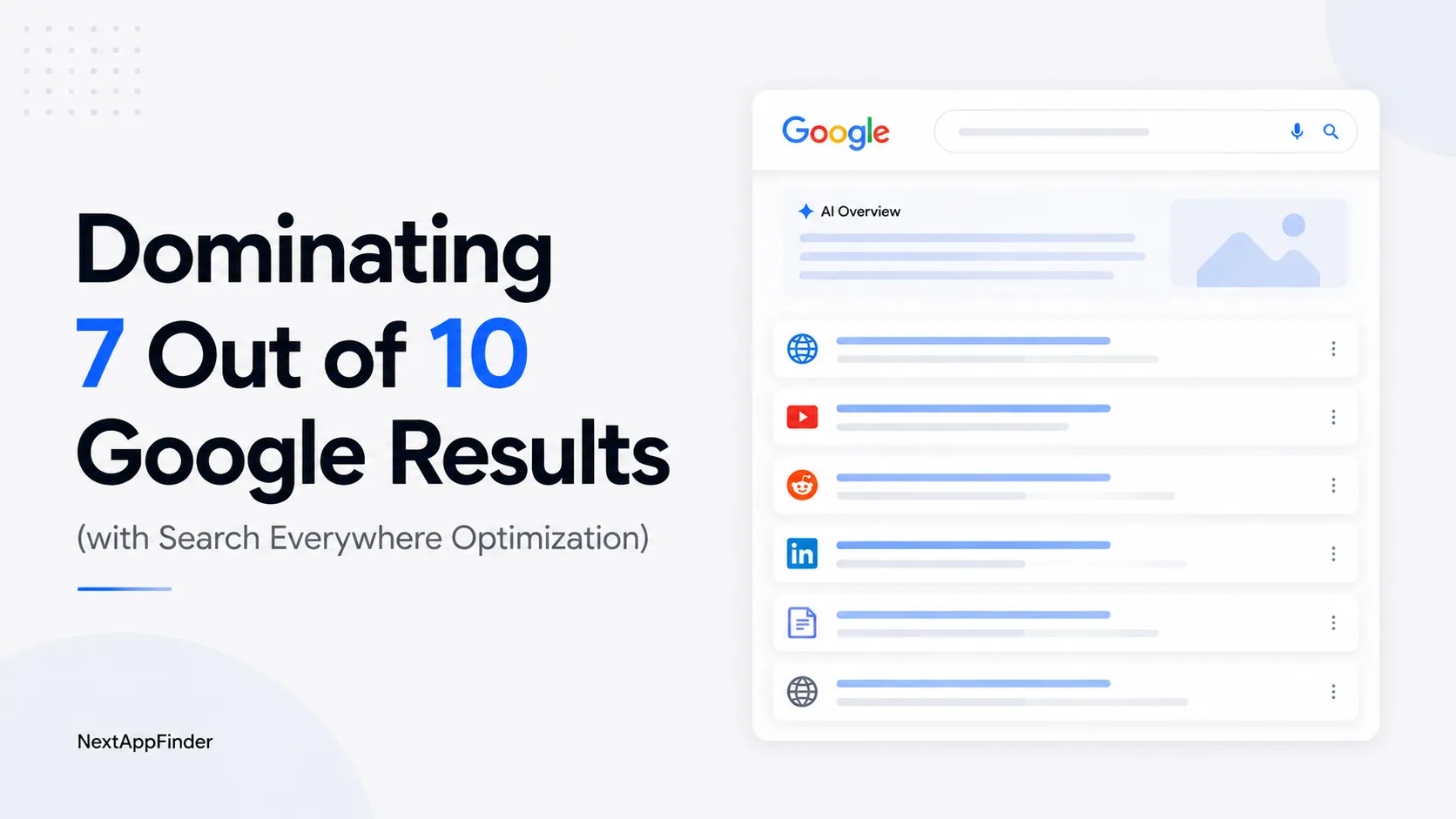
Blogs. Videos. Reddit threads. LinkedIn content. Stacked one after another, across every format Google was willing to serve.
That’s not coincidence. That’s not luck.
That’s a deliberate, well-executed strategy – and it’s one of the cleanest examples of modern SERP domination I’ve seen from a software company in a long time.
But to understand why it works, you first need to understand how search itself has changed.
The Death of the “Ten Blue Links” Era
For most of SEO’s history, the game was simple. Rank your page. Get the click. Win.
Google was essentially a librarian pointing people to the best book on the shelf. You competed for shelf position, and whoever got the top spot got the traffic.
That era is over.
Today’s search results page looks nothing like it did five years ago. A single SERP might contain organic blog results, a video carousel, a Reddit thread, a LinkedIn post, an AI-generated overview pulling from a dozen different sources, and a People Also Ask box – all before you even scroll.
Google isn’t a librarian anymore. It’s a content aggregator. It doesn’t just index your website. It indexes YouTube, Reddit, LinkedIn, Quora, and not-so-popular forums – and it surfaces whichever format it thinks best answers the query.
This changes everything about how visibility should be pursued.
Search Everywhere Optimization: The New Playbook
The concept emerging from this shift is what’s now being called Search Everywhere Optimization – and it’s the most important strategic evolution in SEO since the rise of content marketing.
The core idea is straightforward: when evaluating solutions, customers research and get information from multiple channels. Google wants to fulfill that intent through its SERP. So, now it displays different types of results – hence, the rise of forum-related search results like Reddit threads.
If you want to dominate a keyword, ranking your own website is just the beginning. You need to be present across every platform Google is willing to serve – in other words, in every channel, your customer spends time on.
Interestingly, the brands executing this well aren’t just ranking. They’re making it structurally difficult for anyone else to compete.
Because displacing one blog post is easy. Displacing a coordinated presence across five platforms simultaneously is an entirely different challenge.
What WPXPO has done for several of its targeted keywords is one of the most precise executions of this strategy I’ve come across in the WordPress and WooCommerce space. So let’s break it down.
The SERP Snapshot: What’s Actually Happening Here
At the time of my research, for the keyword “best woocommerce bundle plugin,” WPXPO held 7 out of the top 10 organic positions. When you factor in the AI Overview – which is visibly pulling from their content – that number rises to 9 placements on a single search results page.
Nine touchpoints. One brand. One keyword.
That kind of coverage doesn’t happen by accident and it doesn’t happen by writing one good blog post. This is the result of a coordinated, multi-channel content strategy executed with real precision.
What makes it even more impressive is the keyword itself. This isn’t a top-of-funnel informational query. Someone typing “best woocommerce bundle plugin” is actively evaluating options. They’re close to making a buying decision.
Every single placement on this SERP is reaching that person at maximum buying intent – and WPXPO is meeting them at every turn.
Multi-channel Planning Before Writing the Content
Here’s what separates what WPXPO did from what most SEO teams do.
Most teams ask: “What content should we create?”
WPXPO clearly asked: “What does this SERP need to look like – and how do we fill it?”
That’s a fundamentally different starting point. And you can see the answer playing out across the results page.
Blog posts on their own domain. A guest post on an external site. A YouTube video. Reddit threads. A LinkedIn newsletter. Each one is a different format, living on a different platform, serving a different kind of searcher.
This is SERP architecture in action with the help of a well-thought multi-channel marketing strategy – mapping out the shape of the results page before a single piece of content gets written, then methodically building to fill that map.
It’s the tactic very few SEOs practice, and the brands that do it consistently end up with positions that are almost impossible to displace through conventional link building alone.
The Content Strategy: Same Keyword, Different Angles
What really stands out when you look at the actual content ranking is that WPXPO diversifies its approach for different channels.
The blog posts are structured, comparative, and detailed — exactly the format someone in research mode wants to consume. They answer the query directly, comprehensively, and with enough depth to earn Google’s trust.
They published a dedicated LinkedIn newsletter on the exact same topic. My bet is – they repurposed their existing blog post. But here’s the thing, they made the newsletter a unique piece of content their followers will love. They reframed it in a more narrative, insight-driven tone – because that’s what performs on LinkedIn.
On another note: They also published a YouTube video which takes a different angle, leaning into the “free” solution approach. That’s a sharp tactical call.
Queries that include the word “free” consistently pull higher click-through rates, and YouTube is the perfect home for that angle because customers earlier in the funnel are more receptive to exploratory content.
The Reddit presence is handled exactly the way Reddit needs to be handled – through genuine participation. No spam drops, no obvious promotions.
WPXPO understood this assignment very well. They participated in the threads where it was relevant and positioned their product WowRevenue as one of the results.
This is sophisticated content strategy. “Repurpose your content” is advice everyone gives and almost no one executes well. What WPXPO has done here is actually adapt each piece to its platform’s culture, format, and audience expectations.
The Reddit Play: The Most Underrated Move in This Entire Strategy
I want to give Reddit its own section because most marketers either ignore it or get it completely wrong.
Reddit is one of the most powerful organic search channels available right now. Threads rank fast, hold their positions stubbornly, and carry a level of perceived authenticity that branded content simply can’t replicate.
When someone sees a Reddit result recommending a product, they trust it differently than they trust a company blog.
But Reddit only works if you respect it. Drop a promotional link into a thread without earning it and you’ll get downvoted, flagged, and banned. The community will turn on you.
WPXPO got this right. Their presence in these threads reads as participation, not promotion. That’s the only way to build Reddit visibility that actually sticks – and the fact that these threads are sitting on page one, holding steady, is proof that they put in the work to do it properly.
The LinkedIn Newsletter: The Biggest Hidden Asset on This SERP
While researching the SERP for the keyword “best woocommerce bundle plugin”, the LinkedIn newsletter placement is the detail I found most fascinating.
LinkedIn newsletters don’t have a reputation as SEO assets. They live on a social platform. Most people assume they perform or die within the LinkedIn feed, measured in likes and comments and shares.
But there it is, ranking on a commercial Google SERP and appearing inside the AI Overview.
By social engagement standards, a LinkedIn newsletter might look underwhelming. Low likes, modest comments. Easy to write off as underperforming.
But WPXPO’s newsletter is simultaneously holding a first-page position on a buying-intent keyword, appearing in AI-generated summaries, and landing directly in subscribers’ inboxes. That’s three impressive source of visibility from a single asset.
Dissecting the Ranking Impact of Different Platforms: Which Channel Yields Faster Results?
One of the more fascinating part of this research is identifying how the different platforms boost ranking and visibility over time.
From my own research and what I have seen for different brands including WPXPO – LinkedIn and Reddit content indexes fast and Google picks it up quickly. And it starts appearing in results almost immediately. So, these channels gave WPXPO early search visibility while their longer-form content was still climbing.
As we all know, traditional blog posts “takes time” to get a good position on SERPs. However, they also hold sustainable ranking once established – meaning Google thinks you wrote a helpful content.
YouTube sits in the middle. It builds gradually, but once a video gains traction it tends to hold strong visibility for a long time.
So, which platform should you focus first? I would say, start with a blog post – and immediately discuss the same topic through a Reddit post and LinkedIn article. While the blog article works as the base content, the reddit thread and LinkedIn content gives you early boost in visibility.
Once you produce these content, gradually branch out to other channels such as YouTube videos, third-party collaborations, social media mentions and so on.
What Every SEO Should Take From This
The instinct in SEO is still to find a keyword, write a post, and build links. That model isn’t dead – but it’s increasingly insufficient on its own in the new answer engine search era.
Google is surfacing more formats, more platforms, and more diverse content types than it ever has before. AI Overview is pulling from across the web. Video results are expanding. Reddit and LinkedIn are appearing regularly on commercial SERPs.
In that environment, a single well-optimized blog post is one asset competing against brands that have covered every surface.
What WPXPO has demonstrated is that the brands willing to think about the full SERP – not just one single position – are the ones who end up owning it. They didn’t compete for positions. They architected a presence that filled the page before competitors even knew the game had changed.
That shift in thinking, from “how do I rank?” to “how do I own this SERP?”, is the most valuable lesson here.
And from where I’m standing, WPXPO figured it out.